What They Look Like
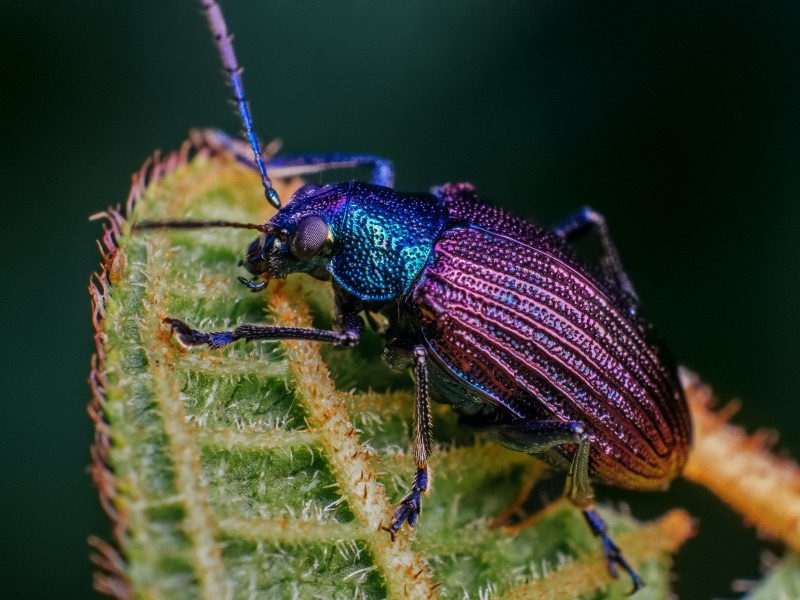
Like all insects, beetles have six legs, three main body sections (head, thorax, and abdomen), and a pair of antennae. Their bodies are usually oval or rounded and covered in a tough outer skeleton called an exoskeleton, which acts like a suit of armor. Most beetles range in size from barely a millimeter long to about the length of a crayon, though a few tropical species grow much larger. Many beetles are brown or black, but some species dazzle with brilliant metallic greens, blues, and golds that shimmer in the sunlight. Their antennae come in many shapes — some are long and thread-like, while others fan out like tiny feathers — and help beetles smell food, find mates, and sense their surroundings.
The Elytra
The feature that sets beetles apart from every other insect is their elytra, a pair of hardened front wings that act as protective covers. Unlike a butterfly’s delicate wings, the elytra are thick and tough, forming a shield over the beetle’s folded flight wings and soft abdomen. When a beetle wants to fly, it lifts its elytra up and out of the way, then unfolds its thin hind wings underneath and takes off. This clever design lets beetles crawl through soil, under bark, and into tight spaces without damaging their flying wings. The elytra are one of the main reasons beetles have been so successful — they provide protection from predators, harsh weather, and the rough surfaces beetles encounter every day.
Where They Live
Beetles live on every continent except Antarctica, and they occupy an incredible range of habitats. Many species live in forests, where they tunnel through wood, hide under fallen leaves, or climb along branches searching for food. Others make their homes in freshwater ponds and streams, carrying a bubble of air beneath their elytra so they can breathe underwater. Desert beetles have developed clever tricks for survival, such as collecting water droplets from fog on their bumpy body surfaces. Some beetles even live in the nests of ants or termites, where they trick their hosts into feeding and caring for them.
What They Eat
Beetles eat an enormous variety of foods, which is part of why there are so many different species. Many are herbivores that munch on leaves, flowers, seeds, roots, or wood. Predatory beetles, such as ladybugs, hunt smaller insects like aphids and can eat dozens of them in a single day. Dung beetles specialize in eating and burying animal droppings — a job that may sound gross but is incredibly important for recycling nutrients back into the soil. Still other beetles are scavengers and decomposers, feeding on dead plants and animals and helping break down organic matter so that forests and fields stay healthy.
Life Cycle
Beetles go through complete metamorphosis, meaning they pass through four distinct stages during their lives: egg, larva, pupa, and adult. A female beetle lays her eggs near a food source so that when the larvae hatch, they have plenty to eat right away. The larvae, which often look like small worms or grubs, spend most of their time eating and growing, shedding their skin several times as they get bigger. When a larva is fully grown, it enters the pupa stage — a resting period inside a protective case where its body transforms dramatically. Finally, the adult beetle emerges with its full set of wings and elytra, ready to find a mate and start the cycle all over again.
Beetle Diversity
The sheer number of beetle species means they come in a staggering variety of shapes, sizes, and lifestyles. Hercules beetles and rhinoceros beetles sport enormous horns that males use to wrestle each other for mates, while fireflies produce their own light through a chemical reaction in their abdomens. Bombardier beetles defend themselves by spraying a boiling-hot chemical mixture from their rear ends, and click beetles can launch themselves into the air with a loud snap when they are flipped on their backs. Jewel beetles gleam with iridescent colors so vivid that people in some cultures use their wing covers in jewelry and decoration. Weevils, one of the largest beetle families, have distinctive long snouts and include more than 60,000 species all by themselves.
Beetles and People
Beetles have a complicated relationship with humans. Some species are serious pests — bark beetles can kill entire forests of trees, and crop-eating beetles like the Colorado potato beetle cause millions of dollars in agricultural damage every year. On the other hand, many beetles are extremely helpful. Ladybugs are welcomed by gardeners because they devour plant-destroying aphids, and dung beetles save the cattle industry billions of dollars by breaking down livestock waste and improving soil health. Scientists also study beetles to learn about evolution, ecology, and even engineering, since the water-collecting ability of desert beetles has inspired new technologies for harvesting water in dry regions. Whether we think of them as pests or partners, beetles play an enormous role in the natural world and in our daily lives.
 OtterKnow Kids Encyclopedia