What They Look Like
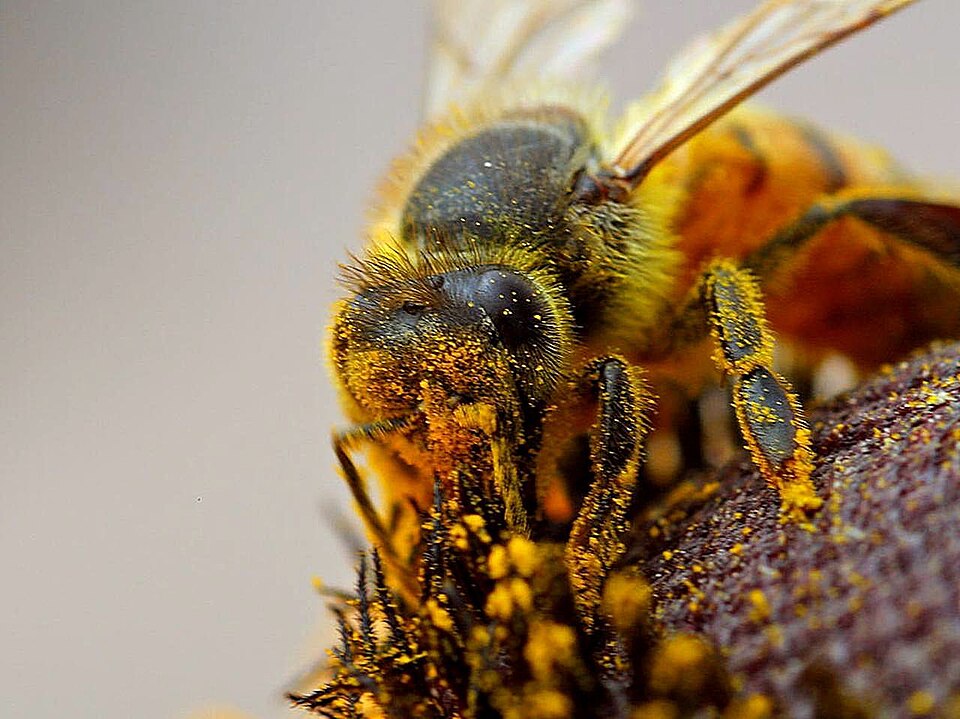
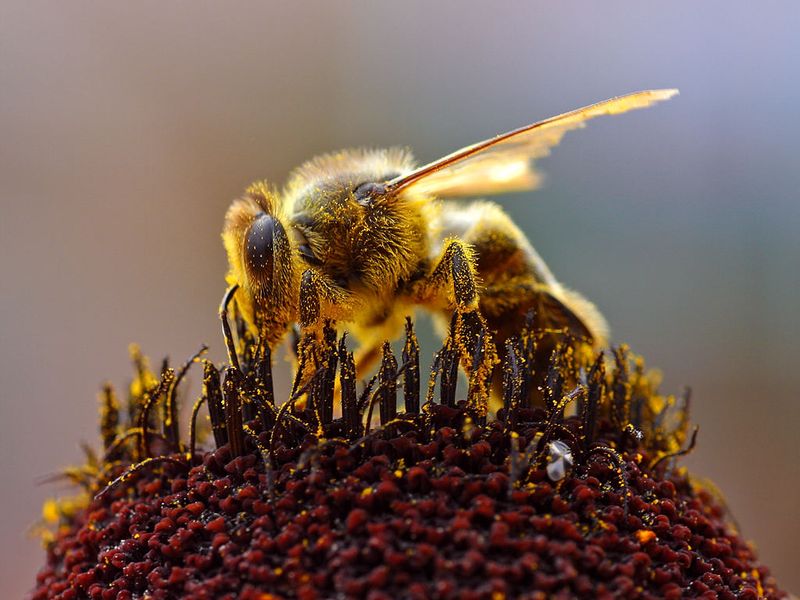
A honeybee’s body is divided into three main parts: the head, the thorax, and the abdomen. Most honeybees are golden-brown with darker brown or black stripes across their abdomen, and their entire body is covered in tiny, branched hairs that help them collect pollen. They have two large compound eyes made up of thousands of tiny lenses, plus three smaller simple eyes on top of their head that detect light and help them navigate. Honeybees have two pairs of transparent wings that can beat around 200 times per second, creating the familiar buzzing sound we hear when they fly past. Bumblebees are rounder and fuzzier than honeybees, while many solitary bees are slender and can be metallic green, blue, or even all black.
Hive and Colony
A honeybee colony is an incredibly organized community that can contain 20,000 to 80,000 bees all living and working together. Every colony has one queen bee, whose main job is to lay eggs — she can lay up to 2,000 eggs in a single day during the busy summer months. The vast majority of bees in the hive are female worker bees, and they handle everything from building honeycomb and feeding larvae to guarding the entrance and foraging for food. Male bees, called drones, have only one purpose: to mate with a new queen from another colony. The hive itself is made of beeswax comb, a structure of perfectly hexagonal cells that bees use to store honey, pollen, and developing young.
The Waggle Dance
One of the most fascinating things about honeybees is how they communicate the location of flowers to their hive mates through a special movement called the waggle dance. When a forager bee discovers a rich patch of flowers, she returns to the hive and performs a figure-eight dance on the surface of the comb. The direction she faces during the straight “waggle” part of the dance tells the other bees which direction to fly relative to the sun. The length of the waggle run communicates distance — a longer waggle means the flowers are farther away. This behavior was decoded by Austrian scientist Karl von Frisch, who received the Nobel Prize in 1973 for his discovery.
Pollination
Bees are the world’s most important pollinators, and about one out of every three bites of food we eat depends on pollination by bees and other insects. When a bee lands on a flower to drink nectar, pollen grains stick to the tiny hairs on her body, and she carries that pollen to the next flower she visits. This transfer of pollen between flowers allows plants to produce fruits, seeds, and new plants. Crops like apples, almonds, blueberries, and cucumbers all rely heavily on bee pollination to produce the food we find in grocery stores. Even many wildflowers and trees depend on bees, which means these insects help support entire ecosystems far beyond our farms and gardens.
Making Honey
Honey starts as flower nectar, a sugary liquid that forager bees collect and carry back to the hive in a special honey stomach separate from their regular stomach. Once back at the hive, the forager passes the nectar to house bees, who chew it and mix it with enzymes that begin breaking down the complex sugars into simpler ones. The bees then spread the nectar into thin layers across the honeycomb cells and fan it with their wings to evaporate most of the water, thickening it into honey. When the honey reaches the right consistency — about 17 to 20 percent water — the bees seal the cell with a wax cap to preserve it. A single honeybee produces only about one-twelfth of a teaspoon of honey in her entire lifetime, so it takes the combined effort of thousands of bees to fill a jar.
Life Cycle
Every bee begins its life as a tiny egg laid by the queen at the bottom of a wax cell. After about three days, the egg hatches into a larva, a small white grub that is fed by nurse bees thousands of times a day. The larva grows rapidly for about six days before the cell is capped with wax, and inside, the larva spins a cocoon and transforms into a pupa. During the pupal stage, the bee’s adult body forms — wings, legs, eyes, and antennae all take shape over roughly 12 days for a worker bee. A new worker chews her way out of the cell and begins her life in the hive, starting with indoor jobs like cleaning cells and feeding larvae before graduating to foraging outside after about three weeks.
Bees and the Environment
In recent years, scientists have grown concerned about declining bee populations around the world due to habitat loss, pesticide use, diseases, and climate change. Colony collapse disorder, a phenomenon where most worker bees in a colony suddenly disappear, drew widespread attention starting in 2006 and highlighted how vulnerable these essential insects can be. Without bees, many wild plant species would struggle to reproduce, which would in turn affect the animals that depend on those plants for food and shelter. People can help bees by planting bee-friendly flowers, avoiding pesticides in their gardens, and supporting local beekeepers who care for healthy hives. Protecting bees is not just about saving one type of insect — it is about preserving the web of life that connects plants, animals, and people across the entire planet.
 OtterKnow Kids Encyclopedia