What They Look Like
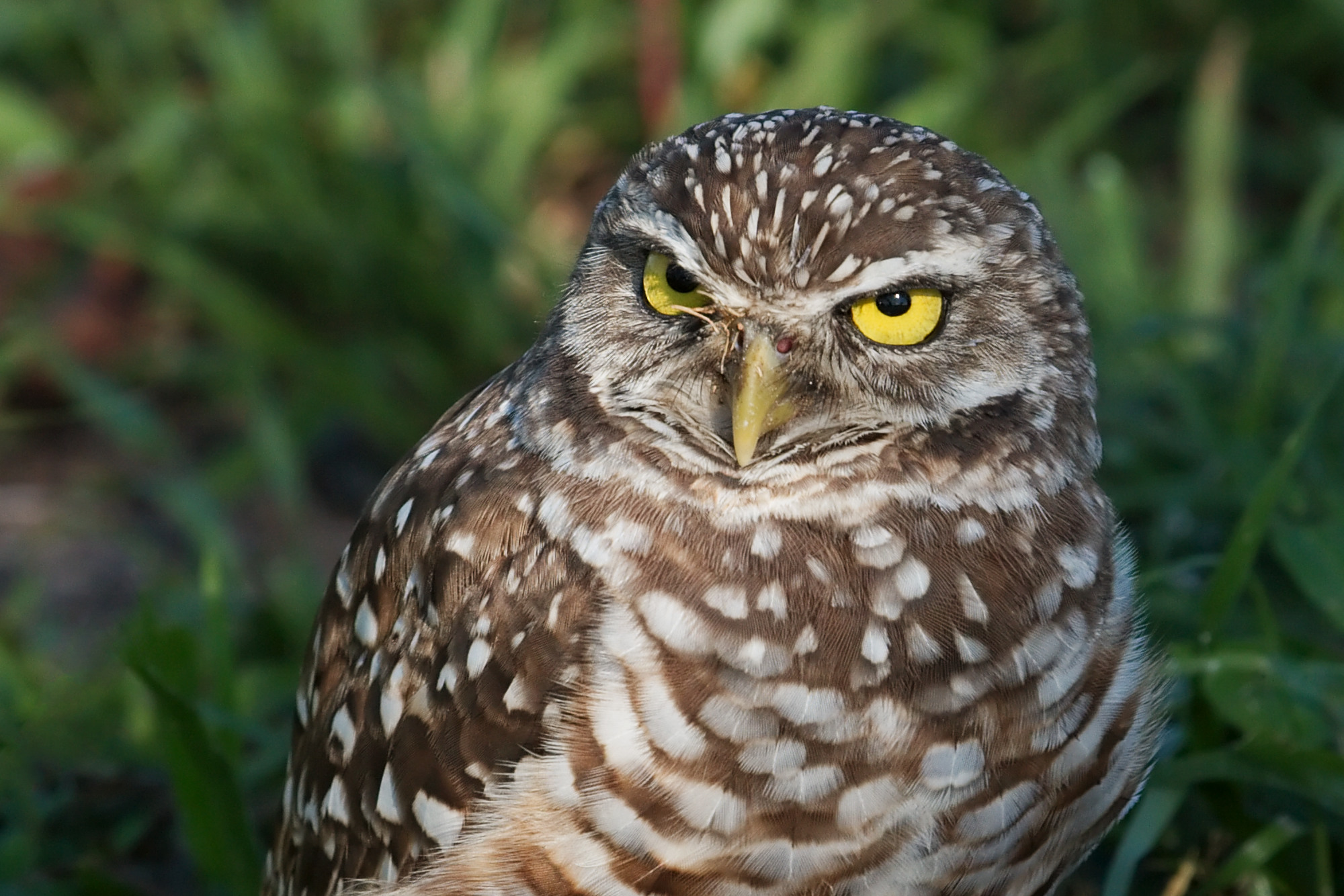
Owls come in a huge range of sizes. The elf owl, found in the deserts of the American Southwest, is only about five inches tall and weighs less than a golf ball, while the Blakiston’s fish owl of eastern Asia can stand over two feet tall with a wingspan of six feet. Despite these differences, all owls share certain features: a large, rounded head, a flat face, forward-facing eyes, and a short, hooked beak. Their feathers are usually brown, gray, tan, or white, with patterns that help them blend into tree bark, snow, or dried leaves. Many species also have tufts of feathers on their heads that look like ears, though these “ear tufts” have nothing to do with hearing and are likely used for camouflage or communication with other owls.
Eyes and Vision
An owl’s enormous eyes are one of its most striking features. Unlike human eyes, which are round like balls, owl eyes are shaped like tubes locked in place inside the skull, so owls cannot move their eyes from side to side. To make up for this, owls can rotate their heads up to 270 degrees — about three-quarters of a full circle — thanks to extra bones in their necks and special blood vessels that keep blood flowing even during extreme head turns. Their large eyes gather far more light than human eyes, giving owls superb night vision that allows them to spot a mouse moving through grass in near-total darkness. Owls also have a third eyelid called a nictitating membrane that sweeps across the eye to keep it clean and protected.
Hearing
While their eyesight is remarkable, many owls rely on hearing even more than vision to catch prey. Barn owls, for example, can locate and capture a mouse in complete darkness using sound alone. Several owl species have ears that are positioned asymmetrically on their heads — one ear is higher than the other — which helps them pinpoint exactly where a sound is coming from in both the horizontal and vertical directions. The flat, disk-shaped arrangement of feathers on an owl’s face, called a facial disk, works like a satellite dish to funnel sound toward the ears. This combination of asymmetrical ears and a facial disk gives owls some of the most precise hearing of any animal on the planet.
Silent Flight
Owls are famous for flying almost silently, a skill that gives them a huge advantage when sneaking up on prey. Three special adaptations make this possible. First, the leading edge of an owl’s wing feathers has a comb-like fringe that breaks up air turbulence and reduces the whooshing sound that other birds make in flight. Second, the surface of their flight feathers is covered in a soft, velvety texture that absorbs sound. Third, the trailing edges of their wing and tail feathers have a flexible fringe that smooths out airflow. Together, these features allow an owl to swoop down on a mouse or vole without making a sound, striking before the prey even knows the owl is there.
What They Eat and Pellets
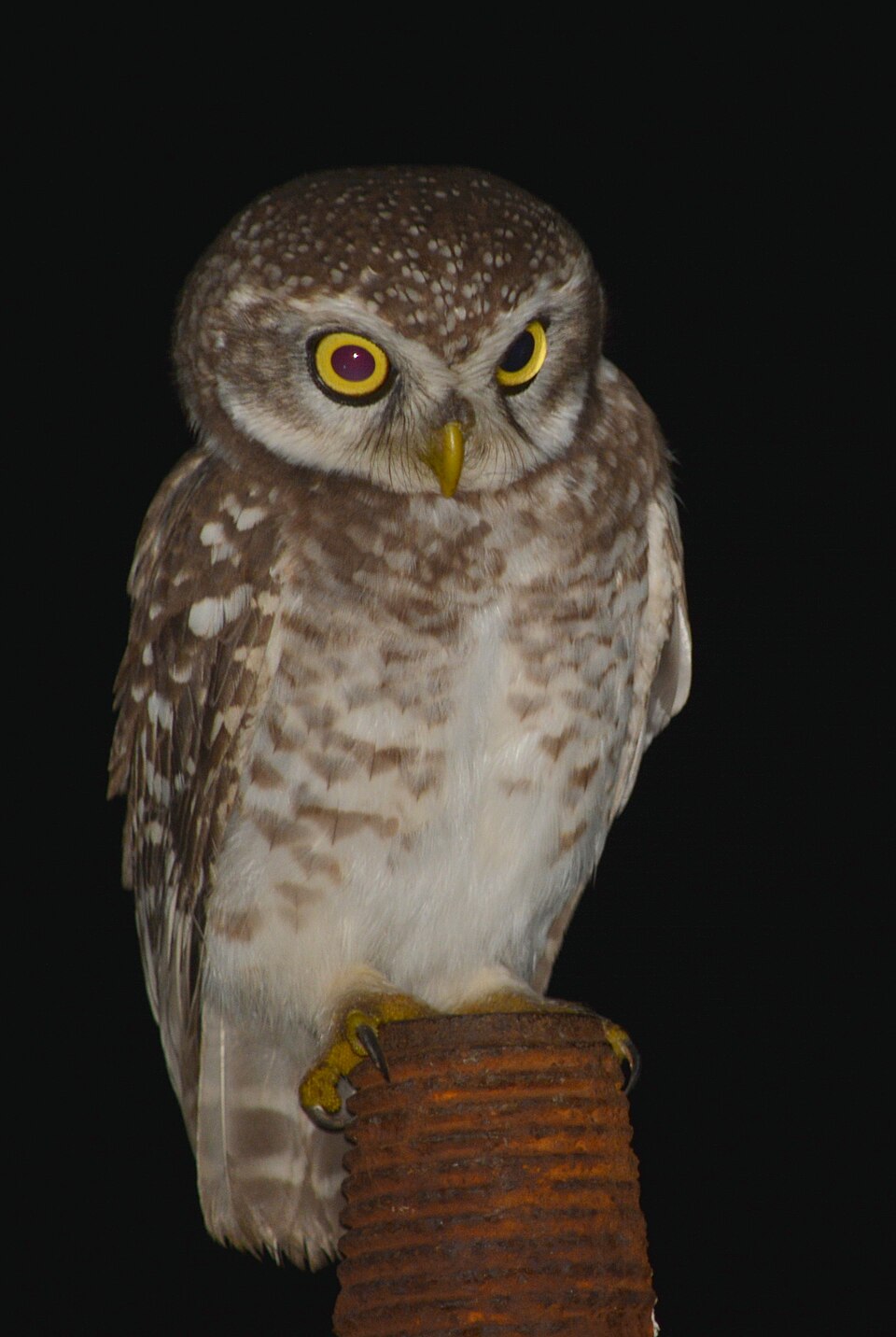
Owls are carnivores, and most species feed on small mammals like mice, voles, and rabbits, though their diets can also include insects, fish, frogs, and even other birds. Great horned owls are powerful enough to take prey as large as skunks and young foxes, while tiny screech owls mainly eat beetles and moths. Owls usually swallow their prey whole or in large chunks because they do not have teeth to chew. Several hours after eating, the owl’s stomach compacts the indigestible parts — bones, fur, feathers, and insect shells — into a tight, oval-shaped lump called a pellet, which the owl coughs up. Scientists often study these pellets to learn what owls have been eating, and dissecting owl pellets is a popular hands-on activity in school science classes.
Nesting
Most owls do not build their own nests. Instead, they take over nests abandoned by other birds such as hawks, crows, or herons, or they nest in natural tree cavities, cliff ledges, and even old buildings. Burrowing owls are an exception — they live underground in burrows dug by prairie dogs, ground squirrels, or tortoises, and they sometimes dig their own burrows using their feet. Owls typically lay between two and twelve eggs depending on the species and the food supply, and the female does most of the incubating while the male brings her food. The eggs hatch at different times because incubation begins as soon as the first egg is laid, so the oldest chick in a nest can be significantly larger than the youngest.
Owls Around the World
Owls have adapted to nearly every habitat on Earth, from scorching deserts to frozen tundra. The snowy owl lives in the Arctic, where its white plumage provides camouflage against the snow, and it hunts lemmings across the open tundra during the long polar days. In tropical rainforests, species like the spectacled owl of Central and South America perch high in the canopy and hunt at night. The powerful owl of Australia is the largest owl on that continent and preys on possums and gliders in eucalyptus forests. No matter where they live, owls play an important role in their ecosystems by controlling populations of rodents and other small animals, which is one reason farmers have long considered them valuable neighbors.
Owls and People
Throughout history, owls have held a special place in human culture. The ancient Greeks associated the little owl with Athena, their goddess of wisdom, and the bird appeared on Athenian coins for centuries. In some Native American traditions, owls are seen as messengers or protectors, while in other cultures they are linked to mystery and the night. Today, many owl species face threats from habitat loss, pesticides that reduce their prey, and collisions with vehicles. Conservation programs such as installing nest boxes for barn owls on farms have helped some populations recover. By protecting forests, grasslands, and wetlands, people can help ensure that owls continue to thrive in the wild.
 OtterKnow Kids Encyclopedia