What They Look Like
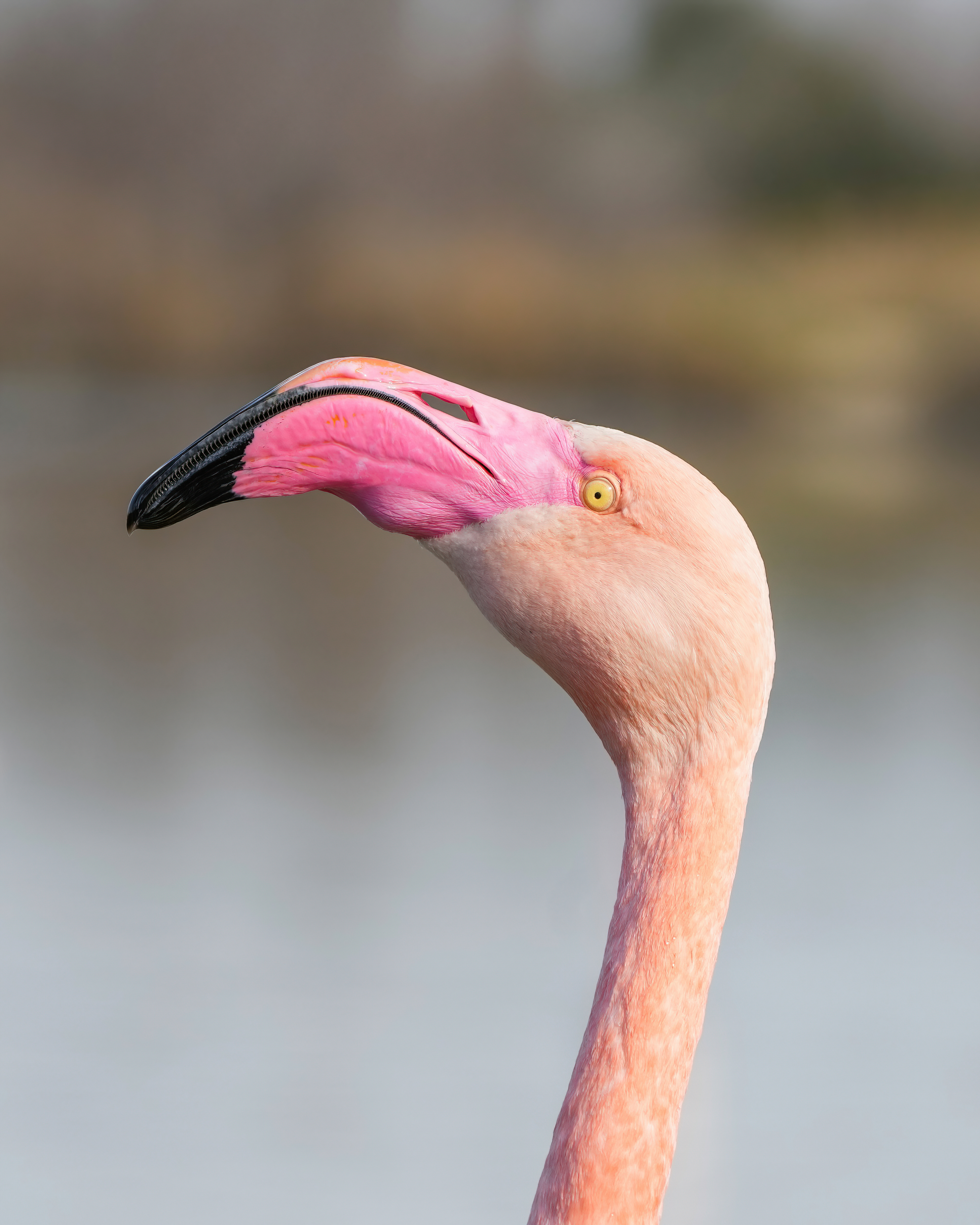
A flamingo’s long, S-shaped neck and stilt-like legs make it easy to spot from far away. Adults can stand between 3 and 5 feet tall depending on the species, with the greater flamingo being the largest. Their legs may look fragile, but they are strong enough to support the bird for hours at a time while it wades through shallow water. Flamingos have large, downward-curving bills that look unusual compared to most other birds, but this unique shape is perfectly designed for their style of eating. Their webbed feet help them walk across soft, muddy lake bottoms without sinking.
Why Are They Pink?
Baby flamingos actually hatch with white or grayish feathers, which surprises many people who assume they are born pink. Their famous color comes from carotenoid pigments found in the foods they eat, especially brine shrimp and blue-green algae. These pigments are the same type of chemical that makes carrots orange and tomatoes red. As a flamingo digests its food, its body breaks down the carotenoids and deposits the pigments into new feathers, skin, and even its bill. A flamingo that does not get enough carotenoids in its diet will gradually fade to a pale white, which is why zoos sometimes add special supplements to their food.
Where They Live
Flamingos are found on every continent except Australia and Antarctica, though they tend to cluster around warm, tropical, or subtropical regions. The greater flamingo has the widest range, living in parts of Africa, southern Europe, and western Asia, while the lesser flamingo is found mainly around the alkaline lakes of East Africa’s Great Rift Valley. In the Americas, the American flamingo lives in the Caribbean, Mexico, and the northern coast of South America, and the Chilean, Andean, and James’s flamingos are found in South America. These birds prefer shallow, salty or alkaline lakes and lagoons because those harsh conditions produce the algae and tiny crustaceans they depend on. Some flamingo populations migrate seasonally to follow food supplies and find the best breeding sites.
Filter Feeding
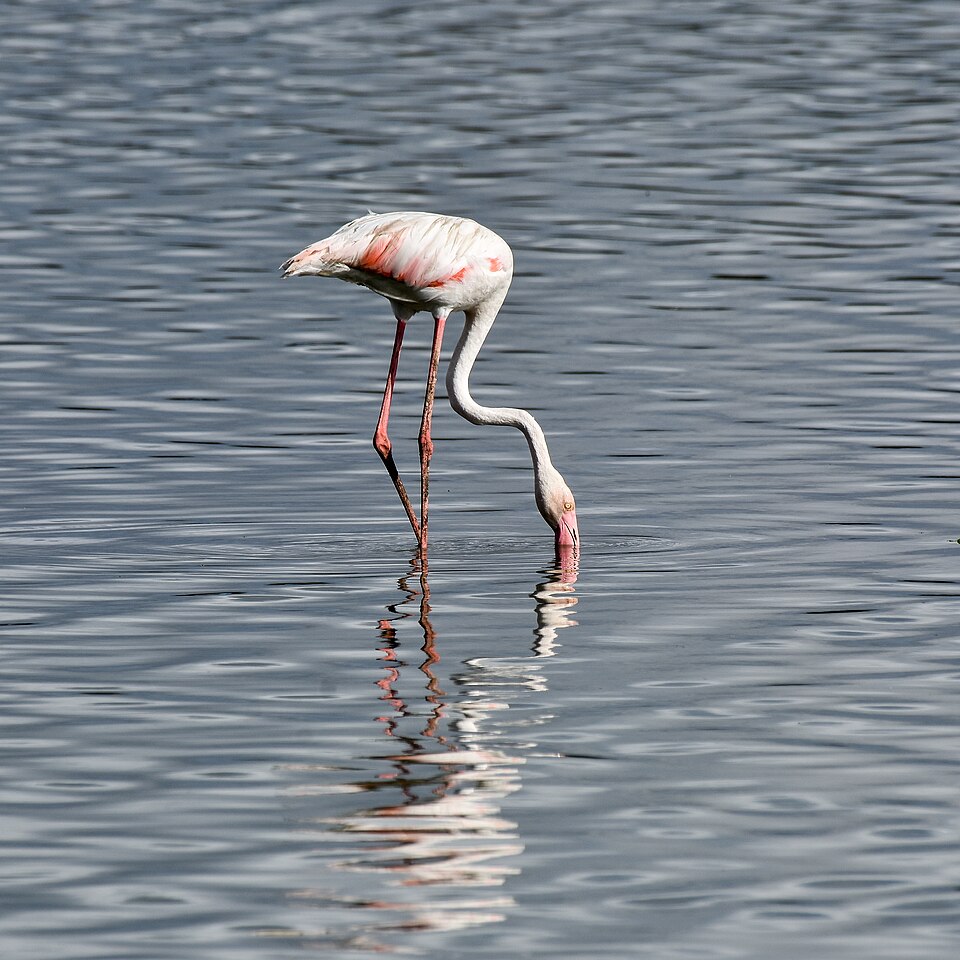
Flamingos are filter feeders, which means they strain tiny organisms out of the water rather than hunting for individual prey. To eat, a flamingo dips its head upside down into the water and sweeps its bill from side to side. The inside of the bill is lined with comb-like structures called lamellae that trap small shrimp, algae, and other microscopic creatures while letting water and mud wash away. This feeding method is somewhat similar to how baleen whales filter krill from the ocean, even though the two animals are not related at all. A flamingo may filter several liters of water every minute to collect enough food for a meal.
Flocks and Social Life
Flamingos are extremely social birds that live in flocks ranging from a few dozen to hundreds of thousands of individuals. The lesser flamingo forms some of the largest flocks in the bird world, with gatherings of over a million birds recorded at Lake Nakuru in Kenya. Living in large groups offers protection from predators because there are always many eyes watching for danger. Flamingos also perform elaborate group courtship displays in which hundreds of birds march, turn their heads, and stretch their wings in perfect unison. These synchronized dances help the entire flock get ready to breed at the same time, which is important for raising chicks together as a community.
Chicks and Family
Flamingo parents build a mound-shaped nest out of mud, and the female lays a single egg on top. Both the mother and the father take turns sitting on the egg to keep it warm for about 28 to 32 days until it hatches. The chick is born with fluffy white or gray down feathers and a straight bill that will gradually curve as it grows. For the first few weeks, both parents feed the chick a nutrient-rich substance called crop milk, which is produced in their upper digestive tract and is bright red due to carotenoid pigments. After about a week, chicks gather into large groups called creches, watched over by a few adult birds while the rest of the flock goes out to feed.
Conservation
While flamingos as a whole are not considered endangered, some species face serious threats. The Andean flamingo and the James’s flamingo of South America are listed as vulnerable, with relatively small populations that could decline further. Habitat loss is one of the biggest challenges, because the shallow lakes and wetlands flamingos depend on are often drained for agriculture or affected by water pollution. Climate change can also alter water levels and salinity in the lakes where flamingos breed, sometimes making entire nesting sites unusable. Conservation groups are working to protect key flamingo habitats around the world, and several important breeding sites have been designated as protected areas to give these pink birds a secure future.
 OtterKnow Kids Encyclopedia