What They Look Like
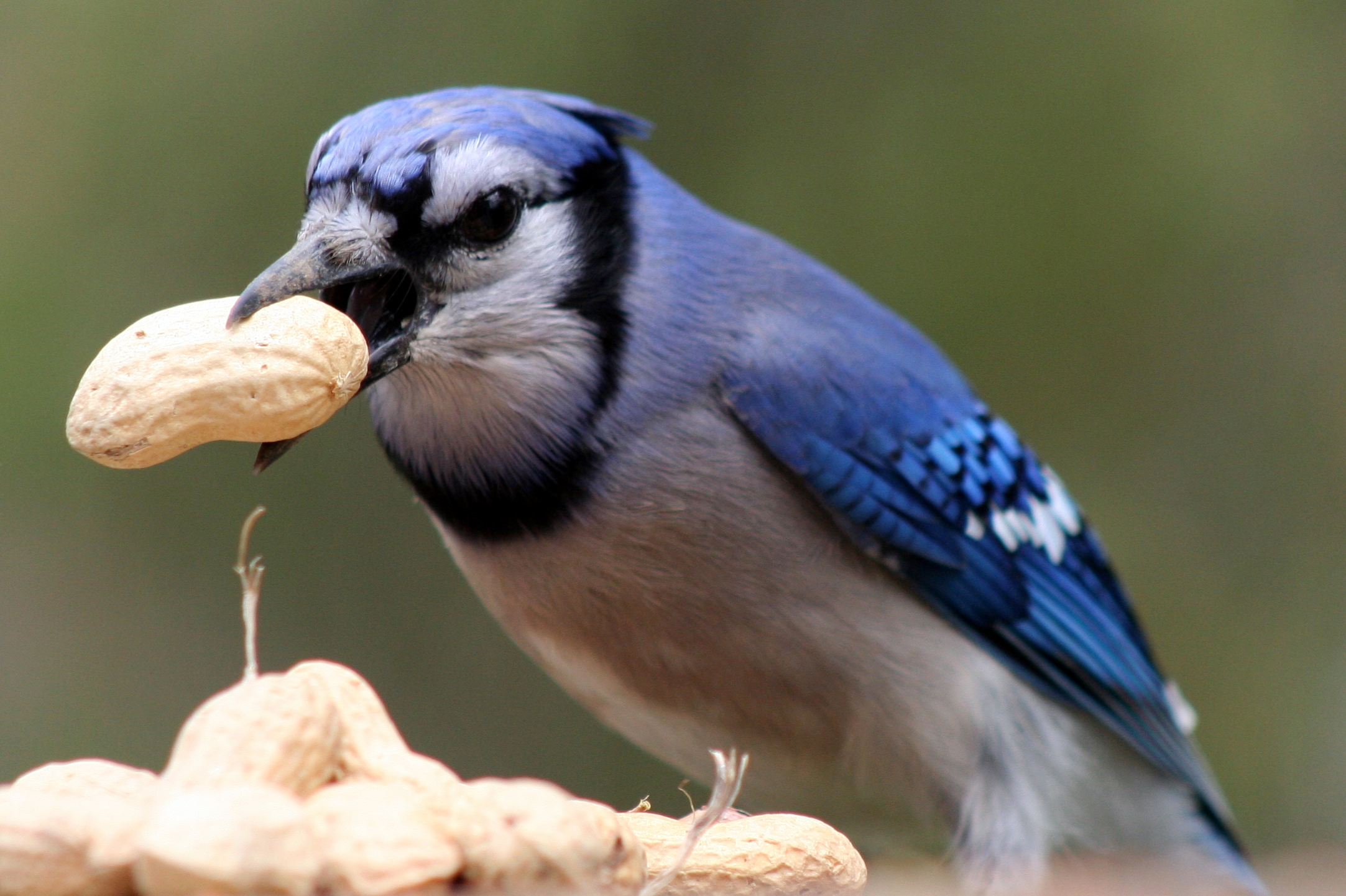
Blue jays are easy to identify thanks to their brilliant blue, white, and black plumage. Their backs, wings, and tails display vivid blue feathers with black bars and white patches, while their undersides are a soft grayish-white. A prominent crest of blue feathers sits on top of their heads, which they can raise or lower depending on their mood — a raised crest often signals excitement or alarm. They also have a black necklace-like band that runs across their throats and around the backs of their heads. Adult blue jays measure about 25 to 30 centimeters long from beak to tail and weigh roughly 70 to 100 grams, making them a bit larger than a robin.
Intelligence and Mimicry
As members of the corvid family, blue jays are remarkably intelligent birds that can solve problems and plan ahead. Scientists have observed captive blue jays using strips of newspaper as tools to rake in food pellets that were placed out of reach, a behavior that shows creative thinking. One of their most impressive talents is vocal mimicry — blue jays can imitate the calls of several hawk species so convincingly that other birds flee the area. Researchers believe they may use these fake hawk calls to scare competitors away from food sources, though jays also seem to make the calls simply when no hawks are around. Blue jays have more than two dozen distinct calls of their own, allowing them to share detailed information with their flock about food, predators, and territory boundaries.
Where They Live
Blue jays are found throughout the eastern and central United States and southern Canada, from the Atlantic coast westward to the Rocky Mountains. They thrive in deciduous and mixed forests, especially those with plenty of oak, beech, and hickory trees that produce the nuts they love. However, blue jays are highly adaptable and do well in suburban neighborhoods, city parks, and farmland edges where trees and bird feeders provide food and shelter. While many blue jays stay in the same area year-round, some populations in the northern parts of their range migrate south in the fall. Scientists still do not fully understand what triggers migration in blue jays, since an individual bird may migrate one year and stay put the next.
What They Eat
Blue jays are omnivores with a varied diet that shifts with the seasons. During spring and summer, they eat large quantities of insects, caterpillars, beetles, and grasshoppers, which provide essential protein for growing chicks. In fall and winter, they switch to a diet heavy in nuts, seeds, and berries, with acorns being their all-time favorite food. Blue jays are also known to visit backyard bird feeders, where they eagerly gobble up sunflower seeds and peanuts. Occasionally, they will eat the eggs or nestlings of other bird species, though studies show that this makes up less than one percent of their overall diet.
Acorns and Forests
Blue jays play a surprisingly important role in shaping North American forests through their habit of caching, or hiding, acorns for later use. A single blue jay can collect and bury up to 5,000 acorns in one autumn, carrying them in a special expandable throat pouch that can hold up to five acorns at a time. They transport acorns as far as several kilometers from the parent tree and bury them in the soil, often in open areas where young trees have the best chance of sprouting. Because jays forget or abandon many of their caches, thousands of buried acorns germinate and grow into new oak trees each year. Scientists believe that blue jays were one of the key animals responsible for the rapid northward spread of oak forests after the last ice age ended roughly 10,000 years ago.
Nesting and Family
Blue jays typically form monogamous pairs that stay together for life, working as a team to raise their young. Both the male and female help build the nest, which is a sturdy cup of twigs, bark strips, and moss placed in the fork of a tree, usually 3 to 10 meters off the ground. The female lays three to six eggs that are pale blue or light brown with dark speckles, and she incubates them for about 17 to 18 days while the male brings her food. After hatching, the chicks are helpless and featherless, relying on both parents to feed and protect them for about three weeks before they fledge. Young blue jays often stay with their parents through the first winter, learning survival skills before setting off on their own the following spring.
Blue Jays and People
Blue jays have a long and lively relationship with humans, and they are one of the most frequent visitors to backyard bird feeders across eastern North America. Their intelligence means they quickly learn feeding schedules and will show up at the same time each day, sometimes even recognizing individual people. Blue jays serve as excellent sentinel birds in the wild — their loud alarm calls when a hawk, cat, or snake appears alert every other bird and small animal in the area to danger. The blue jay is so beloved that it became the namesake of Toronto’s Major League Baseball team, the Blue Jays, founded in 1977. With a lifespan of up to 17 years in the wild and their fearless, curious nature, blue jays have earned a special place as one of North America’s most admired backyard birds.
 OtterKnow Kids Encyclopedia