What They Look Like
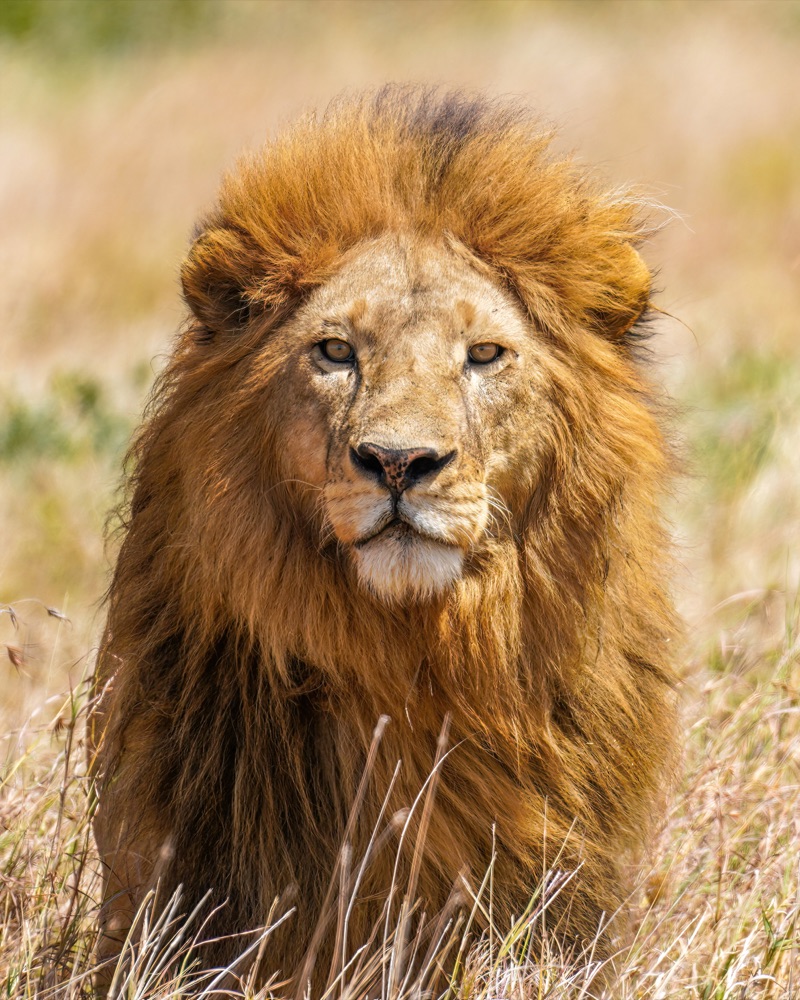
Male lions are easy to recognize because of their thick, shaggy mane of fur that surrounds their head and neck. This mane can range in color from golden blond to dark brown, and it makes the male look bigger and more intimidating to rivals. Female lions, called lionesses, do not have manes and have sleeker, more streamlined bodies built for speed and agility. An adult male lion typically weighs between 150 and 250 kilograms (330 to 550 pounds) and can measure nearly 3 meters (about 10 feet) from nose to tail. Lions have powerful jaws, sharp retractable claws, and tawny golden fur that helps them blend into the dry grasses of the African savanna.
Prides and Social Life
Lions are the only cats that live in organized social groups called prides. A typical pride consists of about 2 to 3 adult males, 5 to 15 related females, and their young cubs. The lionesses in a pride are usually sisters, daughters, and mothers who stay together for their entire lives, while males eventually leave to find prides of their own. Living in a group gives lions many advantages, including better success at hunting large prey and greater protection for their cubs against predators. Male lions defend the pride’s territory, which can cover an area of 20 to 400 square kilometers, by patrolling, scent-marking, and chasing away intruders.
Where They Live
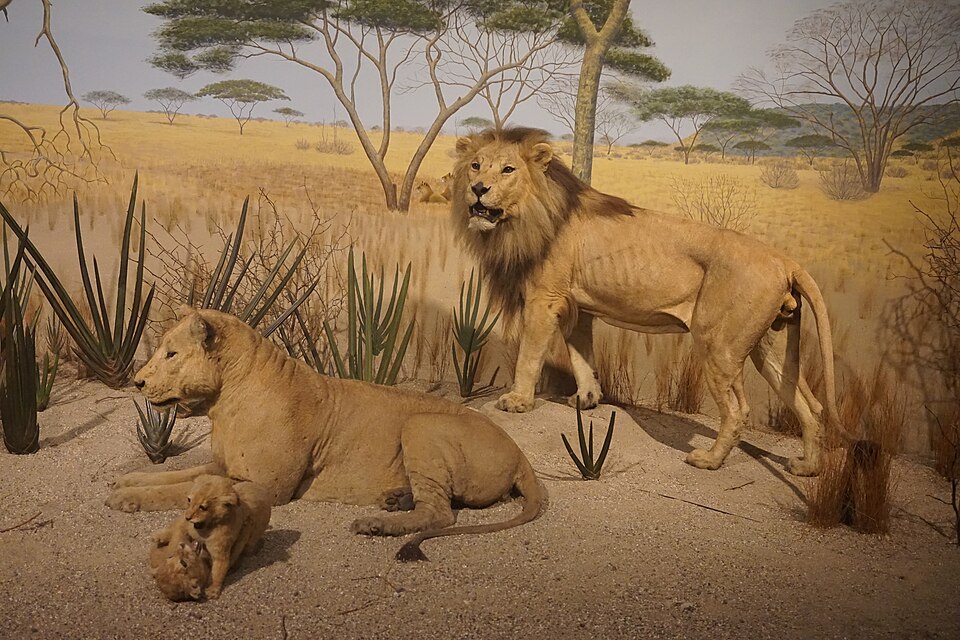
Most of the world’s wild lions live in sub-Saharan Africa, in habitats ranging from open grasslands and savannas to scrubby woodlands and semi-arid plains. Countries like Kenya, Tanzania, South Africa, and Botswana are home to significant lion populations, and many lions live within national parks and wildlife reserves. A small, separate population of Asiatic lions survives in the Gir Forest of western India, numbering around 700 individuals. Lions once ranged across much of Africa, southern Europe, and southwestern Asia, but their territory has shrunk by more than 90 percent over the past century due to habitat loss and human expansion.
Hunting
Lionesses do most of the hunting for the pride, working together in coordinated groups to bring down prey much larger than themselves. They often hunt at night or during the cooler hours of dawn and dusk, using the cover of darkness to stalk close to their target before launching a short, explosive charge. Common prey includes zebras, wildebeest, buffalo, and various antelopes, though lions are opportunistic and will also eat smaller animals when the chance arises. A hunting team of lionesses fans out to surround the prey, with some lions driving the animal toward others lying in ambush. Despite their teamwork, only about one in every four hunts ends in a successful kill, so lions must be persistent and patient.
Roaring and Communication
A lion’s roar is one of the most powerful sounds in the animal kingdom and can be heard from up to 8 kilometers (5 miles) away. Lions roar to announce their presence, warn rivals to stay away from their territory, and keep in contact with other pride members spread across large distances. Besides roaring, lions communicate through a variety of sounds including grunts, purrs, snarls, and a soft humming call that mothers use to keep track of their cubs. They also use body language such as head rubbing and grooming each other to strengthen social bonds within the pride. Each lion’s roar is unique, allowing pride members to tell one another apart by sound alone, even in the dark.
Cubs and Family Life
Lionesses give birth to litters of one to four cubs after a pregnancy that lasts about 110 days. Newborn cubs are small, weighing only about 1.5 kilograms (3 pounds), and they are born with spotted coats that help camouflage them in the grass. For the first few weeks, the mother hides her cubs away from the pride in a sheltered den, visiting them to nurse several times a day. When the cubs are old enough, they join the pride and are cared for communally, with multiple lionesses nursing and watching over all the young together. Cubs spend much of their time play-fighting, stalking one another, and pouncing on anything that moves, all of which helps them develop the skills they will need to hunt as adults.
Conservation
Lions are classified as Vulnerable by the International Union for Conservation of Nature (IUCN), and their numbers have dropped sharply in recent decades. Scientists estimate that roughly 23,000 to 39,000 wild lions remain in Africa today, compared to an estimated 200,000 just a century ago. The biggest threats to lions include habitat loss as farmland expands, conflict with livestock herders who sometimes kill lions to protect their animals, and a decline in prey species due to overhunting by humans. Poaching and the illegal wildlife trade also pose serious dangers. Conservation programs across Africa are working to protect lion habitats, build wildlife corridors that connect isolated populations, and help local communities coexist with lions through education and compensation programs.
Lions and Other Predators
Lions sit at the top of the food chain in the African savanna, but they still face competition from other large predators. Hyenas are their most common rivals, and clashes between lion prides and hyena clans over food and territory can be fierce and sometimes deadly. Leopards generally avoid lions by hunting at different times and dragging their kills up into trees where lions cannot easily follow. Cheetahs and African wild dogs also share the landscape with lions, but these smaller predators usually give way whenever a lion approaches. This constant competition between predators helps keep the ecosystem in balance, ensuring that no single species dominates the savanna completely.
 OtterKnow Kids Encyclopedia