What They Look Like
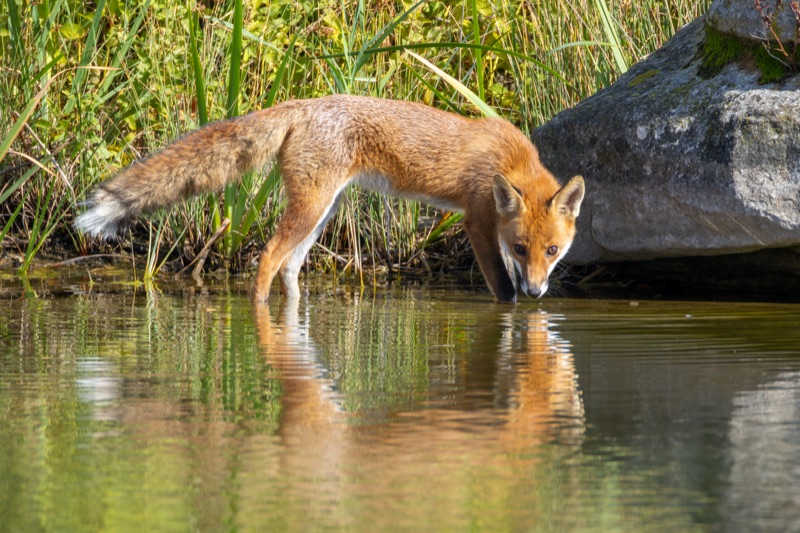
The red fox is about the size of a medium dog, typically weighing between 6 and 15 pounds and measuring around 3 feet long from nose to tail tip. Its thick, bushy tail — called a “brush” — makes up about one-third of its total length and helps it balance while running and stay warm in cold weather. Most red foxes have bright orange-red fur on their backs, white fur on their chests and bellies, and black markings on their legs and ears. Not all foxes look the same, though. The arctic fox has a thick white coat in winter that turns brown or gray in summer, while the fennec fox of the Sahara Desert has enormous ears that can be over 6 inches long and help it release body heat in scorching temperatures.
Senses and Intelligence
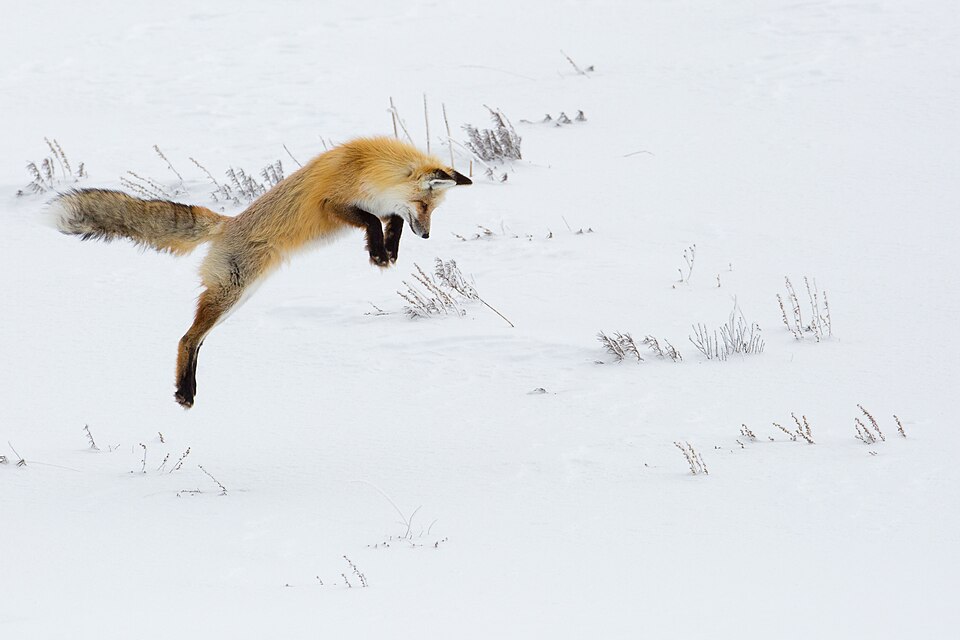
Foxes have remarkably sharp senses that make them outstanding hunters. Their large, pointed ears can rotate independently to pinpoint the exact location of sounds, allowing a red fox to hear a mouse moving under a foot of snow. Once a fox detects its prey beneath the surface, it leaps high into the air and dives headfirst into the snow in a move called “mousing” — and scientists have discovered that foxes are more successful when they pounce facing north, possibly using the Earth’s magnetic field to aim. Their eyesight is well suited for low-light conditions, with vertical slit pupils similar to a cat’s that help them hunt at dawn and dusk. Foxes are also highly intelligent problem-solvers, and researchers have observed them learning to open latches, remember the locations of food caches for months, and even use traffic patterns to cross busy roads safely.
Where They Live
Red foxes hold the record as the most geographically widespread wild carnivore in the world, found from the Arctic tundra to subtropical regions. They are highly adaptable and make their homes in forests, farmlands, prairies, and mountainous terrain. In recent decades, foxes have moved into cities and suburbs in large numbers, thriving in places like London, Berlin, and many North American cities where food scraps and shelter are easy to find. Other fox species have carved out their own niches: the kit fox lives in the dry deserts of the American Southwest, while the tiny fennec fox burrows into the sands of the Sahara. The arctic fox survives some of the harshest conditions on the planet, enduring temperatures as low as minus 58 degrees Fahrenheit thanks to its incredibly dense fur.
What They Eat
Foxes are omnivores, which means they eat both animals and plants. Their diet changes with the seasons and whatever food is most available. In spring and summer, a red fox might feast on rabbits, voles, birds, insects, frogs, and earthworms, while in autumn it happily munches on berries, apples, and other fruit. Foxes are solitary hunters rather than pack hunters, relying on stealth, patience, and quick pounces rather than chasing prey over long distances. They also practice a clever behavior called “caching,” where they bury extra food in shallow holes and return to eat it days or even weeks later, using their excellent memory to relocate each hidden meal.
Dens and Family Life
Foxes raise their young in underground burrows called dens, which they either dig themselves or take over from other animals like badgers or groundhogs. A female fox, called a vixen, gives birth in the spring to a litter of about four to six pups, which are born blind, deaf, and completely dependent on their mother. The male fox, called a dog fox, brings food to the vixen while she stays in the den nursing the newborns during their first few weeks of life. By the time the pups are about a month old, they begin exploring outside the den, tumbling over each other in playful wrestling matches that actually help them develop hunting skills. Most young foxes leave their parents’ territory by autumn to find their own home range, though some female pups stay nearby and may even help raise the next year’s litter.
Communication
Foxes have a surprisingly rich vocabulary of sounds, body signals, and scent marks to communicate with one another. The most famous fox sound is a sharp, high-pitched bark or scream that can be startling to hear at night — this call is often used during the winter mating season or to warn rivals away from a territory. Foxes also whine, growl, yelp, and make a chattering sound called “gekkering” when two foxes are having a face-to-face disagreement. Body language plays an important role too: a fox with its ears flat and body low to the ground is showing submission, while an arched back and puffed-up tail signal aggression. Scent marking is perhaps their most important form of communication, as foxes use urine and glands near their tails to leave chemical messages that tell other foxes who they are, where their territory boundaries lie, and whether they are ready to mate.
Foxes and People
Foxes have appeared in myths, fables, and folklore around the world for centuries, almost always portrayed as cunning tricksters. In Aesop’s fables from ancient Greece, the fox outsmarts other animals with its wits, and in Japanese folklore, fox spirits called “kitsune” are powerful, shape-shifting beings. In real life, foxes and humans have a complicated relationship. Farmers have long seen foxes as pests because they occasionally raid chicken coops, but foxes also help farmers by eating large numbers of rodents and insects that damage crops. Today, many people enjoy watching urban foxes in their backyards, and wildlife organizations work to protect fox species that face threats from habitat loss, trapping, and diseases like rabies and mange.
Conservation
Most fox species are not currently endangered, but some face serious challenges. The red fox is thriving overall thanks to its adaptability, and its population is considered stable worldwide. However, other species are not so lucky — the Darwin’s fox of Chile has fewer than 1,000 individuals left in the wild and is classified as endangered, while the island fox of California’s Channel Islands was once on the brink of extinction before a major conservation effort brought it back. Arctic foxes are also under pressure in some regions as climate change shrinks their tundra habitat and allows larger red foxes to move northward and compete with them for food. Protecting wild spaces, reducing pollution, and studying fox populations are all important steps in making sure every fox species continues to survive and thrive.
 OtterKnow Kids Encyclopedia