What They Look Like
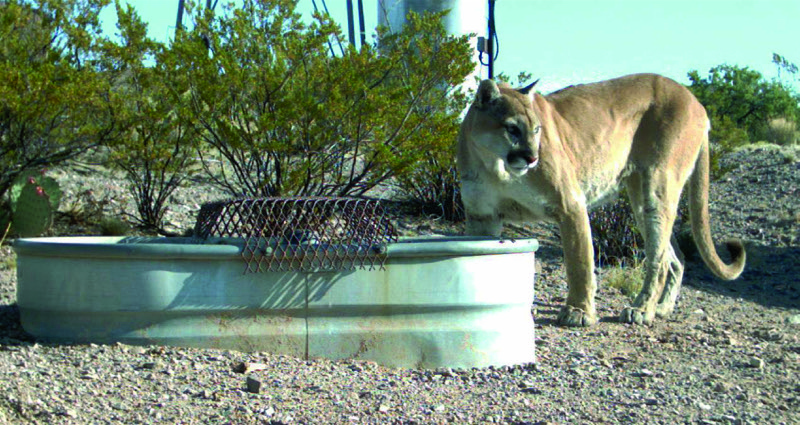
Adult cougars have short, tawny fur that ranges from grayish-brown to warm reddish-tan, helping them blend into rocky hillsides and forest floors. They are built for speed and agility, with long hind legs, a deep chest, and a muscular body that can weigh anywhere from 75 to 200 pounds. Males are significantly larger than females, sometimes reaching over eight feet from nose to tail tip. Their long, heavy tail — which can measure nearly three feet — acts as a counterbalance when they leap across rough terrain or make sharp turns during a chase. Unlike jaguars and leopards, cougars have no spots or rosettes as adults, though their kittens are born with dark spots that fade as they grow.
Where They Live
Cougars are remarkably adaptable and live in a wide variety of habitats, from the snowy peaks of the Canadian Rockies to the steamy swamps of Florida and the dry deserts of Patagonia in South America. They thrive in forests, grasslands, and even semi-arid scrublands, as long as there is enough cover for stalking prey. In the United States, most cougars now live in the western states, though a small population of Florida panthers survives in the southern tip of Florida. Their range once extended across the entire continent, but centuries of hunting and habitat loss pushed them out of most eastern states. Today, some wildlife biologists believe cougars may be slowly spreading back eastward as forests regrow and deer populations increase.
Hunting and Diet
Cougars are ambush predators, meaning they rely on stealth and surprise rather than long chases. They stalk their prey silently, creeping close before launching a powerful leap that can cover 40 feet in a single bound. Deer make up the majority of their diet, but cougars also eat elk, bighorn sheep, rabbits, and even porcupines when larger prey is scarce. After making a kill, a cougar will drag the carcass to a hidden spot and cover it with leaves and dirt, returning over several days to feed. A single adult cougar may need to take down one large deer every week or two to meet its energy needs.
Territory and Solitary Life
Cougars are solitary animals that spend most of their lives alone, coming together only to mate. Each cougar maintains a home range — an area it patrols and hunts in regularly. A male’s territory can span 100 to 300 square miles and often overlaps with the smaller ranges of several females. Cougars mark the boundaries of their territory by scraping the ground with their hind feet and leaving scent marks on trees and rocks. When two males encounter each other, they usually try to avoid a fight, but violent clashes can occur if one refuses to back down. Despite their size and strength, cougars are surprisingly quiet; they cannot roar like lions or tigers, but they can purr, hiss, chirp, and produce an eerie scream that sounds almost human.
Kittens and Family Life
A mother cougar typically gives birth to a litter of one to four kittens after about three months of pregnancy. The kittens are born blind and helpless, weighing just about one pound each, with spotted fur and blue eyes that later turn golden-brown. For the first two months, the mother keeps her cubs hidden in a sheltered den — a rock crevice, a dense thicket, or a hollow log — while she hunts nearby. By six months old, the young cougars begin following their mother on hunts and learning the skills they will need to survive on their own. Most young cougars leave their mother between 12 and 18 months of age and set off to find their own territory, a dangerous journey during which many do not survive.
Living Near Humans
As cities and suburbs expand into cougar habitat, encounters between people and these big cats have become more common. Cougars are naturally shy and avoid humans whenever possible, but hungry or young cats sometimes wander into neighborhoods, especially in western states like Colorado, California, and Washington. Attacks on people are extremely rare — fewer than two dozen fatal cougar attacks have been recorded in North America over the past century. Wildlife agencies recommend making noise on trails, hiking in groups, and never running from a cougar, since running can trigger its instinct to chase. Communities near cougar territory sometimes use motion-activated lights, secure livestock pens, and education programs to help people and cougars coexist safely.
Conservation
Cougars were once hunted relentlessly across North America because ranchers saw them as a threat to livestock. By the early 1900s, they had been eliminated from nearly all of the eastern United States and were in serious decline in the West. Legal protections and hunting regulations introduced in the mid-twentieth century helped cougar populations recover in many western states, and today their numbers are considered stable across most of their remaining range. The Florida panther, however, remains one of the most endangered mammals in the United States, with only about 120 to 230 adults surviving in the wild. Conservation efforts for the Florida panther include highway underpasses to reduce road kills, habitat preservation, and a genetic rescue program that brought in cougars from Texas to strengthen the small population’s gene pool.
The Cougar’s Role in the Ecosystem
As top predators, cougars play a critical role in keeping ecosystems healthy and balanced. By preying on deer and elk, they prevent these herbivores from becoming too numerous and overgrazing the plants that many other species depend on. Studies in areas where cougars have been removed show that deer populations can explode, leading to damaged forests, eroded stream banks, and declines in birds and small mammals. Cougars also leave behind carcasses that provide food for scavengers like eagles, coyotes, and bears. Scientists sometimes call cougars a “keystone species” because their presence has ripple effects throughout the entire food web, benefiting creatures they never even interact with directly.
 OtterKnow Kids Encyclopedia