What They Look Like
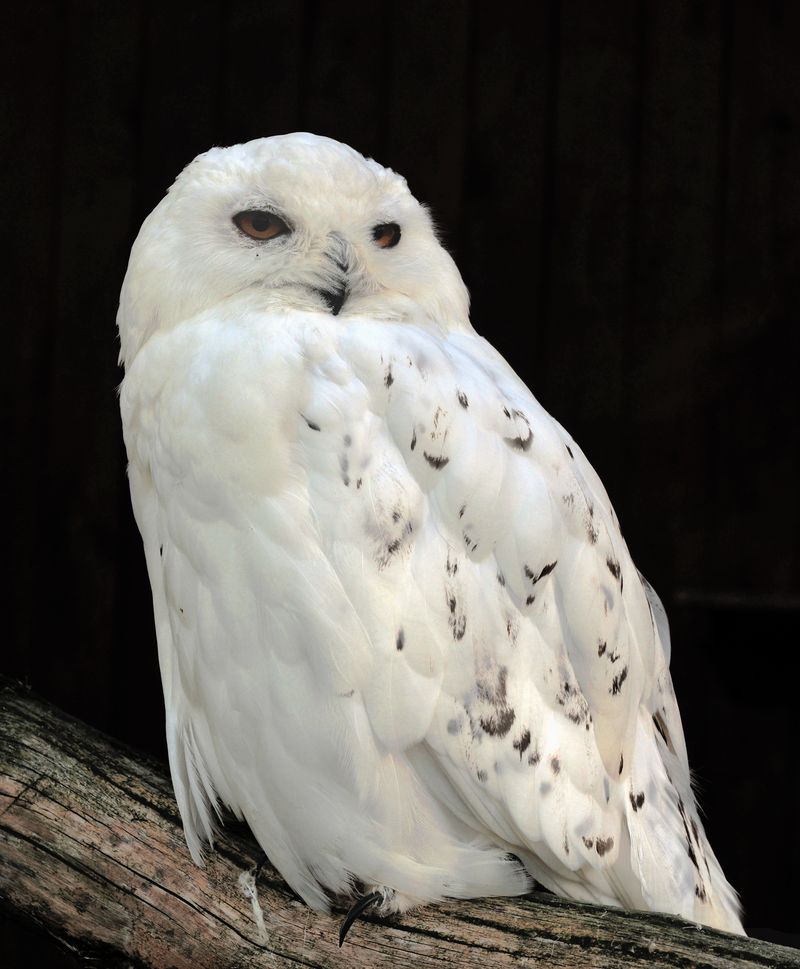
Snowy owls are large, heavy-bodied birds that stand about 50 to 70 centimeters (20 to 28 inches) tall, with a wingspan that can reach up to 150 centimeters (nearly 5 feet). Females are typically larger than males, weighing between 1.6 and 2.9 kilograms (3.5 to 6.5 pounds), while males weigh about 1.3 to 2.5 kilograms (2.9 to 5.5 pounds). Adult males can be almost entirely white, while females and younger birds have dark brown barring and spots across their feathers. This difference in plumage helps scientists and birdwatchers tell males and females apart from a distance. Their legs and toes are covered in thick feathers, giving them the appearance of wearing fluffy boots and providing crucial insulation against the freezing ground.
Senses and Hunting
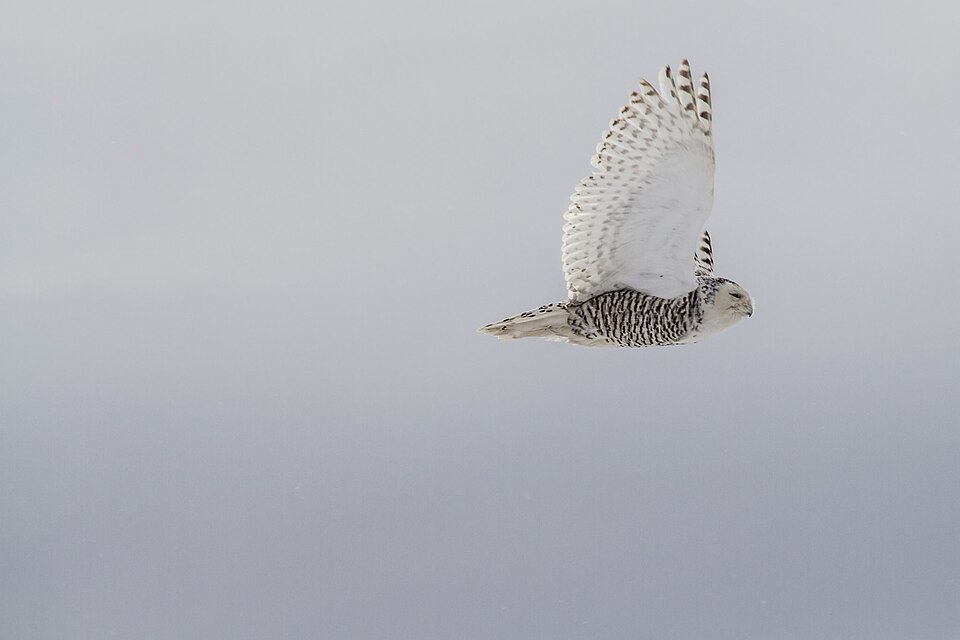
Snowy owls rely on a combination of sharp eyesight and keen hearing to locate their prey. Their large, forward-facing eyes give them excellent binocular vision, allowing them to judge distances accurately when diving toward a target. Like other owls, snowy owls have asymmetrical ear openings, with one positioned slightly higher than the other on their skull, which allows them to pinpoint the exact location of sounds in three dimensions. This means a snowy owl can detect a lemming scurrying under a layer of snow without ever seeing it. When hunting, they often perch on a high point such as a mound or fence post, scanning the landscape patiently before swooping down in a swift, silent glide to grab their prey with powerful talons.
Where They Live
Snowy owls breed on the Arctic tundra of North America, Europe, and Asia, favoring flat, open terrain where they can see in every direction. In North America, their breeding range stretches across northern Canada and Alaska, while in Eurasia it extends across Scandinavia and northern Russia. They prefer areas with slight rises or hummocks that provide vantage points for hunting and nesting. During the non-breeding season, many snowy owls migrate southward into southern Canada and the northern United States, where they seek out landscapes that resemble the open tundra, such as farmland, airports, lakeshores, and coastal dunes. Unlike forest-dwelling owls, snowy owls almost never perch in trees, instead spending their time on the ground or on low posts and rocks.
What They Eat
Lemmings are by far the most important food source for snowy owls, and the owls’ breeding success is closely tied to lemming population cycles. A single snowy owl can eat three to five lemmings per day, which adds up to more than 1,600 in a single year. When lemmings are scarce, snowy owls switch to other prey, including voles, arctic hares, ptarmigan, and even ducks and geese. They are also capable of catching fish, snatching them from shallow water with their talons. During winter on their southern wintering grounds, snowy owls adapt their diet to whatever is available, hunting small mammals, shorebirds, and occasionally rats near urban areas.
Irruptions
Every few years, large numbers of snowy owls appear far south of their normal winter range in events that scientists call irruptions. During an irruption, snowy owls have been spotted as far south as Texas, Florida, and even Bermuda, thrilling birdwatchers who rarely get the chance to see these Arctic visitors. Scientists once believed irruptions were caused by food shortages that forced starving owls southward, but research has shown that many irrupting owls are actually young, well-fed birds produced during years of abundant lemmings. When lemming populations boom, snowy owls raise unusually large broods, and the resulting surge in young owls pushes many of them far beyond the typical wintering range. Project SNOWstorm, a research initiative that tracks snowy owls using GPS transmitters, has helped scientists learn much more about where these irrupting owls travel and how they survive in unfamiliar territory.
Nesting and Chicks
Snowy owls nest directly on the ground, usually on a raised mound or ridge that gives the incubating female a clear view of approaching predators. The female scrapes a shallow bowl in the earth, lining it with feathers and bits of moss, and lays a clutch of 3 to 11 eggs depending on the food supply. In years when lemmings are abundant, clutches are larger; in lean years, snowy owls may not breed at all. The eggs hatch over several days, so the oldest chick in a nest can be considerably bigger than the youngest. Both parents defend the nest fiercely, with females staying close to the chicks while males hunt and deliver food. Chicks leave the nest at about three weeks old, though they cannot fly for another two to three weeks and continue to depend on their parents for food for up to two months.
Conservation
The International Union for Conservation of Nature (IUCN) lists the snowy owl as Vulnerable, a change from its previous status of Least Concern that reflects growing evidence of population decline. Scientists estimate the global snowy owl population at roughly 28,000 mature individuals, far fewer than earlier estimates that placed the number at over 200,000. Climate change poses the biggest long-term threat, because warming temperatures are altering the Arctic tundra and disrupting the lemming population cycles that snowy owls depend on for food. Other threats include collisions with vehicles and aircraft, electrocution on power lines, and exposure to rodenticides, which are poisons used to kill rodents that can accumulate in owls that eat contaminated prey. Conservation efforts focus on protecting Arctic breeding habitat, reducing human-caused mortality, and continuing research through tracking programs to better understand snowy owl movements and population trends.
 OtterKnow Kids Encyclopedia