What They Look Like
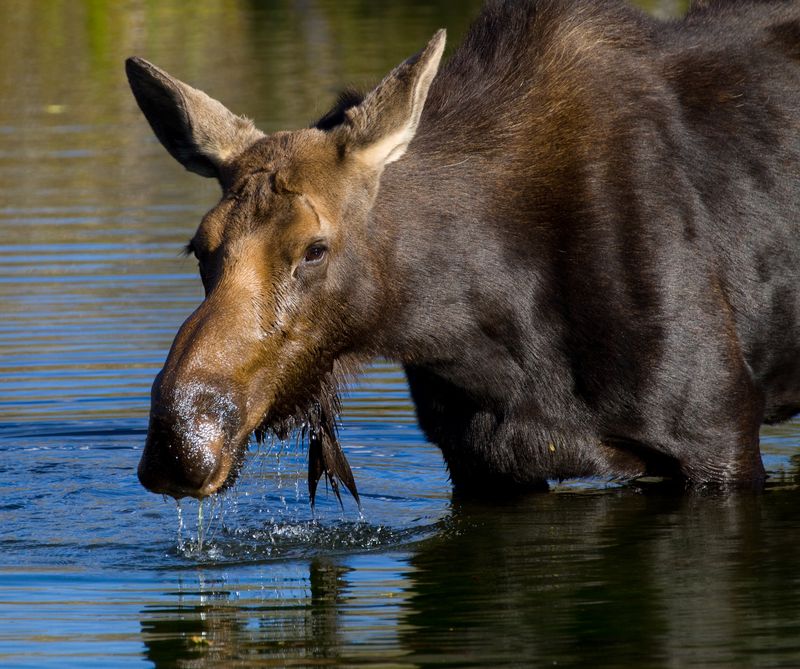
Moose have a distinctive appearance that sets them apart from every other deer. Their bodies are massive and barrel-shaped, covered in dark brown fur that ranges from chocolate brown to nearly black. One of their most recognizable features is the long, drooping nose and overhanging upper lip, which helps them strip leaves and bark from branches. Moose also have a flap of fur-covered skin called a dewlap, or “bell,” that hangs beneath their throat, and scientists are still not entirely sure what purpose it serves. Their long, powerful legs allow them to walk through deep snow and wade into water that would stop most other animals, and each leg ends in a large, two-toed hoof that spreads apart to act like a snowshoe on soft ground.
Antlers
Bull moose grow the largest antlers of any animal alive today, with spans that can reach 6 feet across and weigh up to 80 pounds. Unlike horns, which are permanent, antlers are made of bone and are shed every winter and regrown each spring. During the growing season, antlers are covered in a soft, blood-rich skin called velvet that delivers nutrients to the rapidly growing bone. Moose antlers can grow at an astonishing rate of up to one inch per day, making them one of the fastest-growing tissues in the animal kingdom. By late summer, the velvet dries and peels away, revealing the hard, polished antlers underneath that bulls use to compete for mates during the autumn breeding season.
Where They Live
Moose are found across the boreal forests and subarctic regions of the Northern Hemisphere. In North America, they range from Alaska and Canada down into the northern United States, including states like Maine, Minnesota, Montana, and Wyoming. They prefer habitats near water, such as the edges of lakes, ponds, rivers, and marshes, where they can find their favorite aquatic plants. Moose also thrive in mixed forests of birch, aspen, and willow, where there is plenty of undergrowth to browse. Unlike many other large mammals, moose are solitary animals and do not form herds, though several individuals may feed in the same general area when food is plentiful.
What They Eat
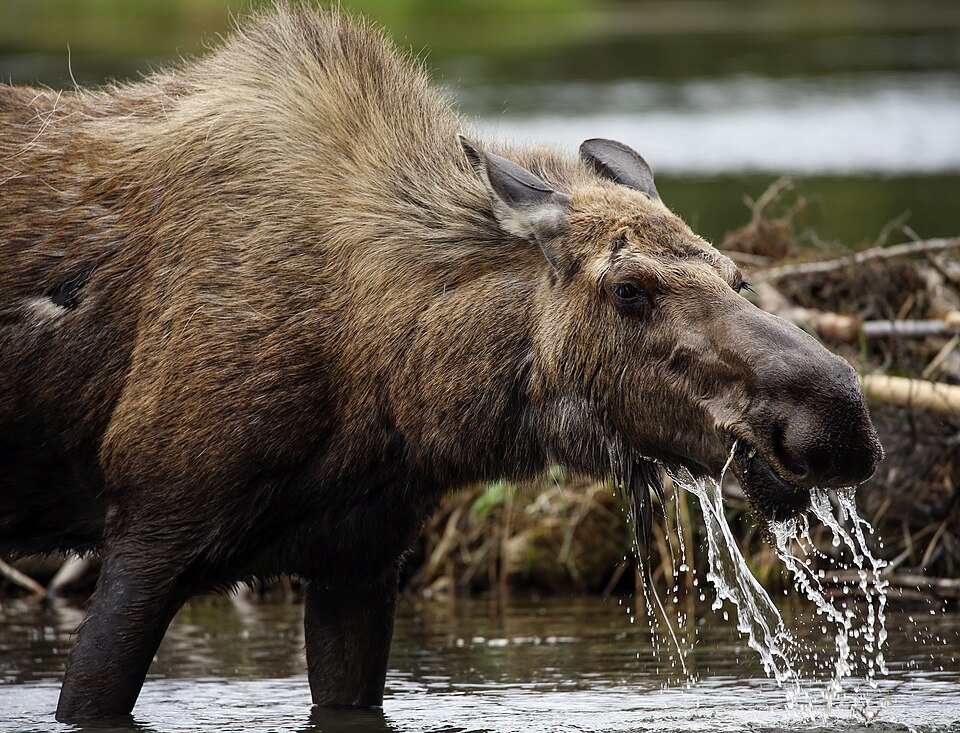
Moose are herbivores with enormous appetites, consuming roughly 40 to 60 pounds of plant material every day during the summer months. In warmer weather, they spend a great deal of time wading into ponds and lakes to eat aquatic plants like water lilies, pondweed, and water shield, sometimes submerging their entire heads to reach vegetation on the bottom. On land, they browse on the leaves, twigs, and bark of trees such as willows, birches, and aspens. During winter, when green plants are buried under snow, moose rely heavily on woody browse, stripping bark and eating the tips of branches and shrubs. Their specialized digestive system, which includes a four-chambered stomach similar to a cow’s, helps them break down the tough, fibrous plant material that other animals cannot digest.
Swimming and Moving
Few people expect an animal as large as a moose to be a strong swimmer, but moose are remarkably at home in the water. They can swim at speeds of up to 6 miles per hour and are capable of crossing lakes and rivers several miles wide without resting. Moose often wade into water to escape biting insects, cool down on hot days, and reach the nutritious aquatic plants that grow beneath the surface. They can even dive to depths of nearly 20 feet and hold their breath for up to 30 seconds while foraging underwater. On land, moose are also surprisingly fast, capable of running at speeds up to 35 miles per hour over short distances, which is faster than the world’s fastest human sprinters.
Predators and Survival
Adult moose are so large that they have relatively few natural predators, but they are not invincible. Wolves are the most significant predator of moose across much of their range, typically working in packs to bring down calves, elderly individuals, or moose weakened by deep snow. In parts of North America, grizzly bears and black bears also prey on moose, especially targeting newborn calves in the spring. Moose defend themselves with powerful kicks from their front hooves, which are sharp enough to seriously injure or even kill an attacking predator. Despite their generally calm demeanor, moose can be surprisingly aggressive when they feel threatened, and wildlife experts consider them more dangerous to humans than bears in many parts of North America.
Calves and Family Life
Female moose, called cows, typically give birth to one or two calves in late May or early June after a pregnancy of about eight months. Newborn calves are reddish-brown and weigh around 25 to 35 pounds, but they grow quickly, gaining more than two pounds per day during their first few months. Within days of being born, calves can follow their mother through the forest and even swim short distances. Moose mothers are fiercely protective and will charge at anything that comes too close to their young, including wolves, bears, and people. Calves stay with their mother for about a year, learning where to find food and how to survive the harsh northern winters, before she drives them away shortly before her next calf is born.
Moose and Their Ecosystem
Moose play an important role in shaping the forests and wetlands where they live. By browsing heavily on young trees and shrubs, they influence which plant species grow and how the forest develops over time. Their feeding habits create open areas in dense forests, which allows sunlight to reach the ground and encourages new plant growth that benefits other wildlife. When moose wade into ponds and lakes to feed on aquatic plants, they stir up nutrients from the bottom that support fish, insects, and other aquatic creatures. Moose are also a vital part of the food web, providing food for large predators like wolves and bears, and their droppings return nutrients to the soil that help plants grow.
 OtterKnow Kids Encyclopedia