What They Look Like
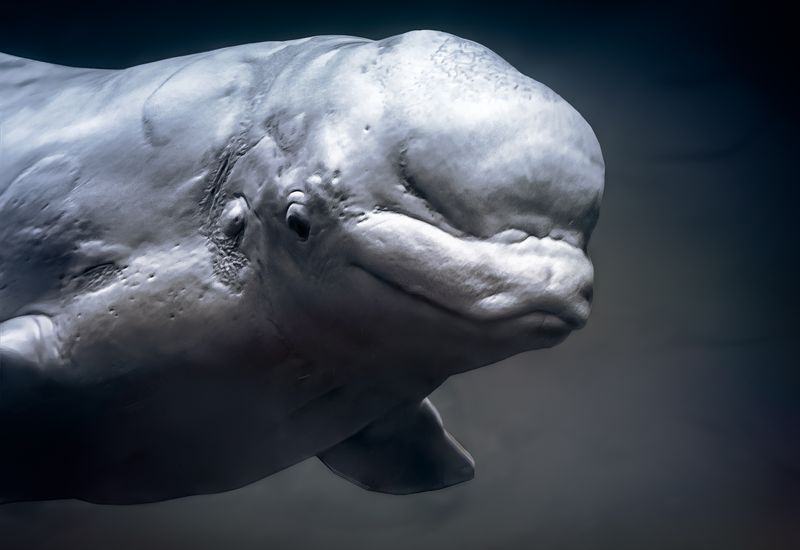
Adult beluga whales are completely white, but they are not born that way. Calves start out dark gray and gradually lighten over several years until they become pure white by around five years old. A fully grown beluga is about 4 to 5.5 meters (13 to 18 feet) long and can weigh up to 1,500 kilograms (3,300 pounds), making them one of the smaller whale species. One of the beluga’s most unusual features is its rounded, bulging forehead, called a melon. This flexible lump of oil and wax plays a key role in how belugas communicate and find food. Unlike most whales, belugas do not have a dorsal fin on their backs. Instead, they have a low, tough ridge, which helps them glide beneath sheets of Arctic sea ice without getting stuck.
A Flexible Neck
Most whale species have neck vertebrae that are fused together, locking their heads in place. Belugas are different. Their neck bones are not fused, which means they can turn their heads up, down, and side to side. This flexibility is a huge advantage when hunting along the ocean floor or navigating through gaps in the ice. It also allows belugas to make facial expressions that almost look like human smiles, which is part of what makes them so appealing to people who visit aquariums.
Echolocation and Communication
Belugas are some of the most vocal animals in the ocean. They produce clicks, whistles, squeals, moos, and other sounds that can sometimes be heard above the surface of the water. Scientists have recorded at least eleven different types of beluga calls. These sounds serve two main purposes: communication and echolocation. When a beluga echolocates, it sends out rapid bursts of clicking sounds through its melon. The melon acts like an acoustic lens, focusing the clicks into a beam that travels through the water. When those sound waves bounce off an object, the echoes return to the whale, telling it the object’s size, shape, distance, and even what it is made of. This ability lets belugas hunt in dark, murky water where their eyes would be of little use.
Where They Live
Beluga whales are found across the Arctic Ocean and nearby seas, including waters off the coasts of Russia, Canada, Alaska, Greenland, and Norway. During summer, many beluga populations move into shallow coastal areas, river mouths, and estuaries where the water is slightly warmer. Some populations make impressive migrations. Belugas from the Bering Sea, for example, travel more than 2,400 kilometers (about 1,500 miles) to reach the Mackenzie River delta in Canada each summer. When winter arrives and ice begins to spread, they head back toward deeper, ice-covered waters.
What They Eat
Belugas have a varied diet that changes with the seasons and their location. They eat many types of fish, including salmon, cod, herring, and smelt. They also feed on invertebrates such as shrimp, squid, octopus, crabs, clams, and even sandworms. Unlike many whale species that filter huge amounts of tiny prey through baleen plates, belugas have teeth, around 34 to 40 of them, which they use to grab and hold their food rather than to chew. They tend to swallow their prey whole or in large pieces.
Life in a Pod
Beluga whales are highly social animals that live in groups called pods. A typical pod contains between 2 and 25 whales, often a mix of males and females or mothers with their calves. Belugas seem to enjoy each other’s company. They play together, rub against one another, and chase each other through the water. During migration, multiple pods sometimes join together to form enormous gatherings that can number in the hundreds or even thousands. These large groups are an impressive sight and may help protect the whales from predators like orcas and polar bears.
Beluga Calves
Female belugas usually give birth to a single calf after a pregnancy that lasts about 14 to 15 months. Newborn calves are about 1.5 meters (5 feet) long and are dark gray or brownish in color. The mother nurses her calf with rich, fatty milk for about two years, though the young whale begins eating solid food before it is fully weaned. Calves stay close to their mothers for several years, learning how to find food, communicate, and navigate the icy waters of the Arctic.
Conservation
While beluga whales as a whole are not considered endangered, certain populations face serious threats. The Cook Inlet population in Alaska, for example, has been listed as endangered because its numbers have dropped sharply and have not recovered. Belugas face dangers from pollution, habitat loss, and climate change, which is melting Arctic sea ice and altering the ecosystems they depend on. Human-made ocean noise from shipping, drilling, and sonar is another growing problem because it can interfere with echolocation, making it harder for belugas to find food and communicate. Conservation groups and governments are working to protect beluga habitats and reduce the noise and pollution that threaten belugas.
 OtterKnow Kids Encyclopedia