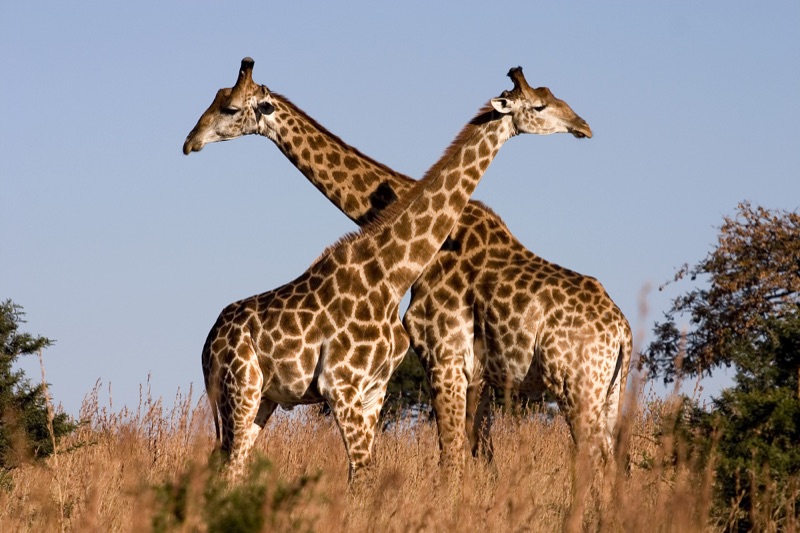
Height and Weight
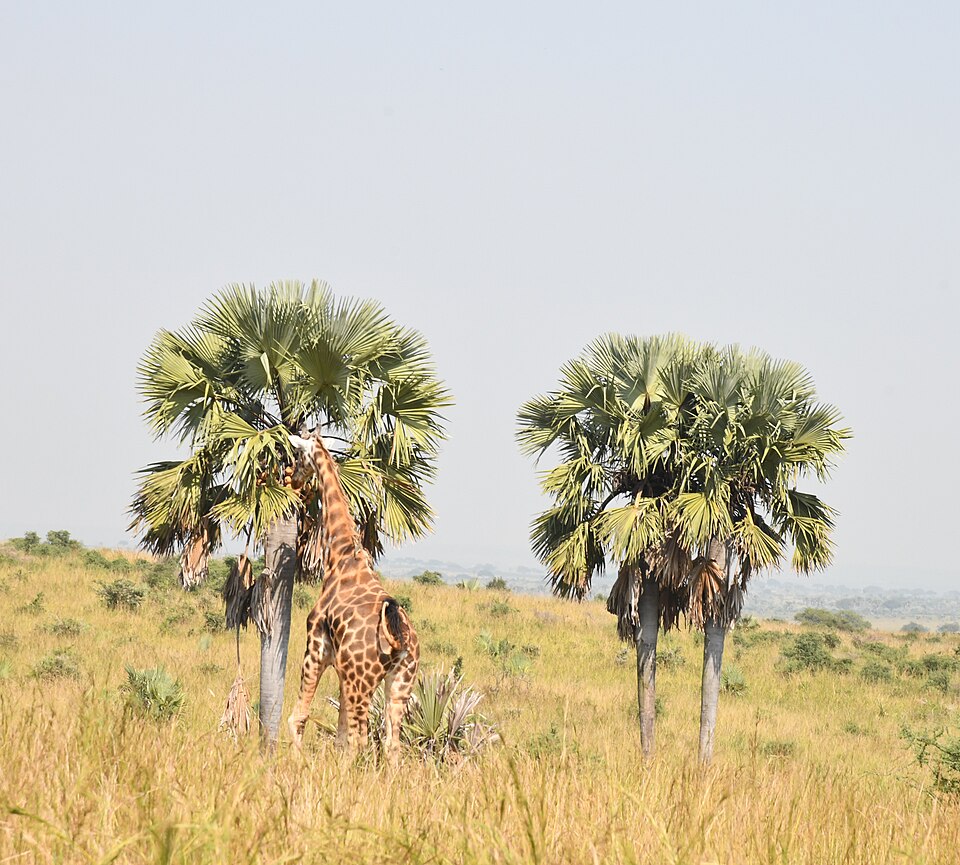
Male giraffes stand between 16 and 18 feet tall (about 5 to 5.5 meters), which is roughly as high as a two-story building. Females are a bit shorter, reaching about 14 to 16 feet. A fully grown male can weigh anywhere from 2,400 to 4,200 pounds, while females are lighter at 1,800 to 2,600 pounds. Even a newborn giraffe calf stands about 6 feet tall at birth, which is taller than most adult humans. Calves are able to stand up and walk within just one hour of being born, which helps them keep up with the herd and avoid predators.
Unique Anatomy
One of the most surprising facts about giraffes is that they have only seven neck vertebrae, the exact same number as humans. The difference is that each of their vertebrae can be over 10 inches long, which is what gives the neck its great length. A giraffe’s heart weighs about 25 pounds (11 kilograms) and measures roughly two feet long because it must pump blood all the way up that towering neck to the brain. Their dark blue-black tongue stretches 18 to 20 inches and is tough enough to wrap around thorny acacia branches without getting hurt. The dark color may help protect the tongue from sunburn, since giraffes spend so much of their day feeding in the open sun.
Ossicones
The small horn-like bumps on top of a giraffe’s head are called ossicones, and they are different from the horns or antlers found on other animals. Ossicones are made of bone covered in skin and fur, and both males and females have them. In males, the ossicones tend to be thicker and may become bald on top from years of fighting. Male giraffes use their heavy heads and ossicones as weapons during fights called “necking,” where they swing their long necks at each other to compete for mates. These battles can look dramatic, but serious injuries are rare.
Diet
Giraffes are herbivores that spend most of their waking hours eating. In the wild, a giraffe can consume up to 75 pounds (about 34 kilograms) of leaves, flowers, seed pods, and fruit each day. Their favorite food comes from acacia trees, and their long tongues and tough lips allow them to strip leaves from branches covered in sharp thorns. Because the leaves they eat contain a good amount of water, giraffes can go days or even weeks without drinking. When they do drink, they must spread their front legs wide apart and lower their heads awkwardly to reach the water, which is one of the few moments when they are vulnerable to predators.
Social Behavior
Giraffes are social animals that live in loose, open groups called towers. These groups usually contain 10 to 20 individuals, though gatherings of up to 70 have been observed. Unlike many other herd animals, giraffe groups do not have a strict leader, and members come and go freely. Female giraffes tend to stay in the same area where they were born, while males often wander between groups. Giraffes communicate with one another through body language, and scientists have discovered that they also produce low-frequency sounds called infrasound that are too deep for human ears to hear.
Predators and Defense
Because of their enormous size, sharp eyesight, and powerful legs, adult giraffes have very few natural enemies. Lions are the only predators that regularly try to take down a full-grown giraffe, and even they rarely succeed. A single kick from a giraffe’s hoof can be deadly, so most predators think twice before attacking. Young calves, however, are much more vulnerable and may fall prey to lions, leopards, spotted hyenas, and African wild dogs. Mother giraffes are fiercely protective and will stand over their calves, ready to deliver powerful kicks to any threat.
Sleep and Daily Life
Giraffes are one of the animal kingdom’s lightest sleepers. They need only about 30 minutes of sleep per day, broken into short naps that last just a few minutes each. Most of the time, they sleep standing up so they can react quickly to danger. Giraffes spend the majority of their day feeding, often browsing at dawn and dusk when temperatures are cooler. During the heat of midday, they may rest in the shade and chew their cud, much like cows, since giraffes are ruminants with four-chambered stomachs that help them break down tough plant material.
Conservation
Giraffes were once found across much of Africa, but their numbers have dropped significantly over the past few decades. Scientists estimate that roughly 117,000 giraffes remain in the wild today, a steep decline from the estimated 155,000 in 1985. The main threats they face include habitat loss from farming and development, poaching, and conflict with humans. Three of the four giraffe species are considered highly threatened by conservation organizations. Protected areas like national parks and wildlife reserves play an important role in keeping giraffe populations safe, and conservation groups across Africa are working to protect these gentle giants for the future.
 OtterKnow Kids Encyclopedia